

When Robert retired from his job at a Geelong engineering firm and his Age Pension was approved, a plastic card turned up in the mail a week or so later. He nearly filed it with the paperwork. Then his pharmacist told him the card would bring each of his three regular scripts down to a few dollars, and his wife mentioned that their council rates bill might come down too.
That card was a Pensioner Concession Card, and it is worth more than many people realise. In short: if you get the Age Pension, Carer Payment, Disability Support Pension or certain other payments, Services Australia sends you the card automatically. It gets you cheaper PBS medicines, a lower Medicare Safety Net threshold, access to the government’s Hearing Services Program, and a range of state, council and private discounts on things like energy bills, rates and car registration.
Who gets a Pensioner Concession Card
You don’t apply for this card. If you’re eligible, Services Australia posts it to you. According to Services Australia, you’ll automatically get one if you receive any of these payments:
- Age Pension
- Carer Payment
- Disability Support Pension
- Parenting Payment single
There is also a group of people aged 55 or older who qualify without being on a pension. If you’re 55 or over and have been getting JobSeeker Payment, Parenting Payment partnered or Special Benefit (as an Australian resident) for more than 9 months, you’ll also be sent a card. Some people with a partial capacity to work, and single principal carers on JobSeeker or Youth Allowance, qualify as well.
The card is issued for 2 years from the date you were granted your qualifying payment, and Services Australia handles renewals. If you think you should have a card and haven’t received one, call the line you normally use for your payment. For older Australians that is usually the Centrelink older Australians line on 132 300.
One common point of confusion: the Pensioner Concession Card is not the same as the Commonwealth Seniors Health Card, which is for people over Age Pension age who don’t get a pension because their income or assets are too high. And neither card is the same as a state Seniors Card, which is based on age and hours of work rather than income and gives mainly transport and business discounts.
Cheaper medicines on the PBS
For most people the biggest everyday saving is at the pharmacy. With a concession card, you pay the concessional co-payment for medicines listed on the Pharmaceutical Benefits Scheme instead of the general rate.
As at November 2026, the PBS website lists the concessional co-payment at $7.70 per script, compared with up to $25.00 for general patients. These amounts are usually indexed on 1 January each year, so check the PBS site in the new year.
There is also a safety net. Once you and your family have spent $277.20 on PBS medicines in a calendar year (the concessional threshold as at November 2026), your PBS scripts are generally free for the rest of that year. Ask your pharmacist to keep a record of your scripts, or to tell you when you’re getting close, especially if you use more than one pharmacy.
A few things to know:
- Pharmacies can still charge extra for brand premiums or for medicines that aren’t on the PBS.
- Private scripts don’t count towards the PBS safety net.
- Dependent children listed on your card may also be able to get the concession.
Doctors and the Medicare Safety Net
Services Australia lists bulk billed doctor visits as a card benefit, depending on your doctor. Since 1 November 2025 the federal government has paid GPs bulk billing incentives for all Medicare card holders, not just concession card holders and children. In practice, whether you’re bulk billed still depends on the clinic, so ask when you book.
Where the card still makes a clear difference is the Extended Medicare Safety Net. This helps with out-of-hospital costs such as specialist visits and some tests once your out-of-pocket spending passes a threshold in a calendar year. For 2026 the concessional threshold is $861.20, compared with $2,699.10 for everyone else, according to the Department of Health, Disability and Ageing. Once you pass it, Medicare pays back more of your out-of-pocket costs for the rest of the year. Couples and families need to register as a family with Medicare so their costs are combined.
Hearing help: the Hearing Services Program
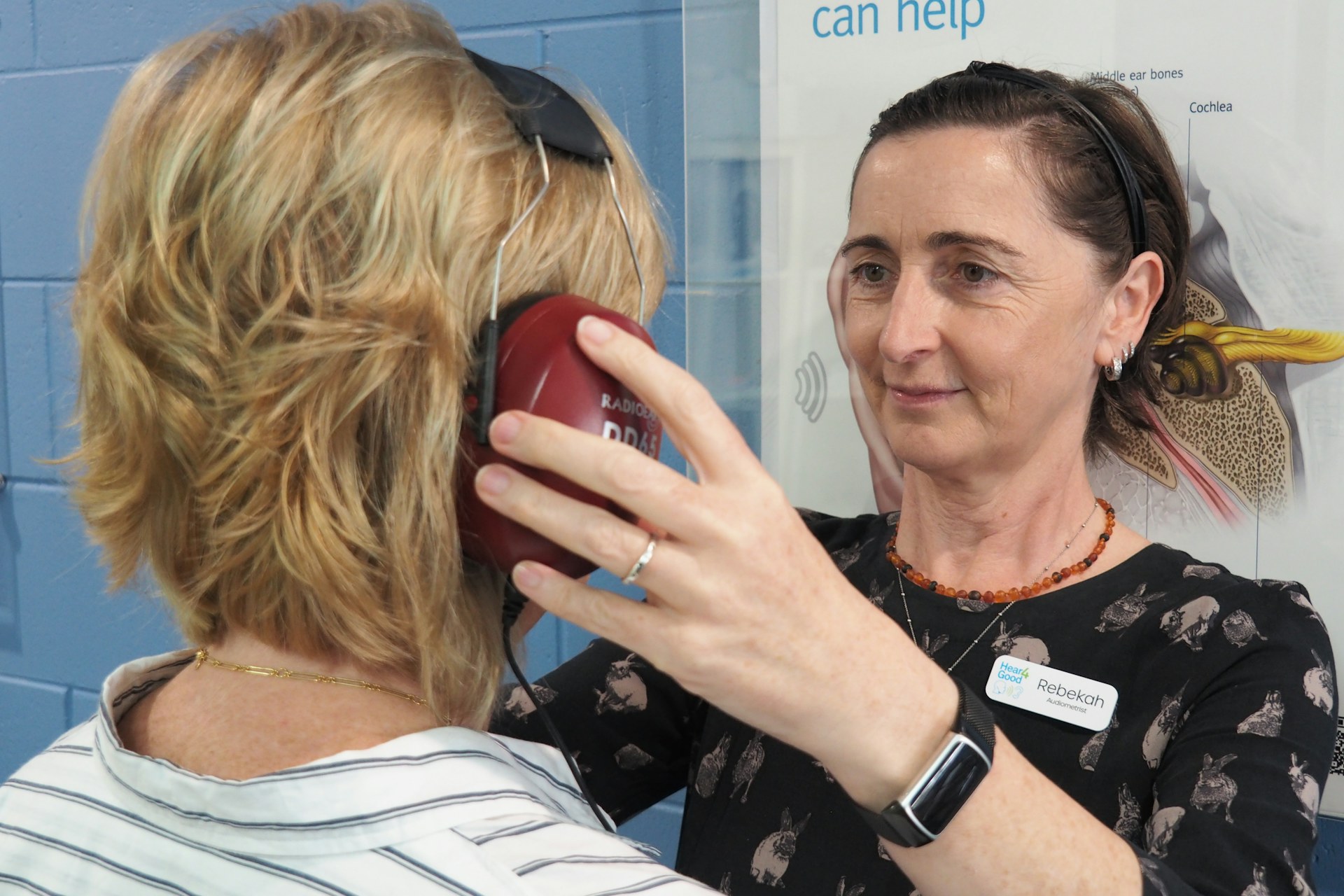
This is one of the most valuable benefits of the card, and one of the least used. The federal Hearing Services Program provides subsidised hearing assessments and hearing aids to eligible people. The Department of Health, Disability and Ageing says you’re eligible for the voucher scheme if you are an Australian citizen or permanent resident, aged 21 or over, and a Pensioner Concession Card holder or the spouse of one. Veteran Gold Card holders and some other groups also qualify.
Importantly, the department states that a Commonwealth Seniors Health Card does not give you access to the program. So if you’re comparing cards, this is a real difference.
Under the voucher scheme you can get a hearing assessment and, if you need them, hearing aids from a list of fully subsidised devices at no cost to you, plus maintenance for a small annual fee. You can choose a partially subsidised device and pay the difference, but the department warns that this gap can be substantial, and your provider must tell you about equivalent fully subsidised options. Vouchers are valid for 5 years. If you live in a remote area or have complex hearing needs, you may be able to get services from Hearing Australia under the program’s Community Service Obligations instead.
To get started, you can apply online through the Hearing Services Program, or a participating hearing provider can help you with the application. If you’d like to understand how the process works in a clinic, including what the fully subsidised devices include and what a top-up costs, this overview of getting hearing aids as a pensioner through the government program walks through the steps. Our own guide to free hearing aids for pensioners explains the program in more detail, including how to change providers.
State and territory concessions
Beyond the federal benefits, every state and territory offers its own concessions to Pensioner Concession Card holders. The details and amounts change often, usually each 1 July, so the table below lists the main types of concession and where to check them rather than exact dollar figures.
| State/territory | Examples of concessions for PCC holders | Where to check |
|---|---|---|
| NSW | No registration fee or motor vehicle tax for one vehicle (card must show an NSW address); statutory council rates rebate of up to $250 a year, with some councils adding more; energy rebates | NSW Government Community Support; Service NSW |
| Victoria | 50% off the registration fee (not the TAC charge) for one vehicle; municipal rates concession; annual electricity concession; water concessions | Victorian Government concessions and benefits |
| Queensland | Electricity and gas rebates; council rates subsidy; vehicle registration concession; discount on the Emergency Management Levy for your home | Queensland Government concessions |
| Western Australia | Energy Assistance Payment; concessions on council rates, water service charges and the Emergency Services Levy; driver’s licence fee concessions | WA Government concessions; Water Corporation; RevenueWA |
| South Australia | Energy bill concession; Cost of Living Concession payment; vehicle registration concessions | ConcessionsSA (sa.gov.au) |
| Tasmania | Electricity concession and heating allowance; council rates remission; motor tax rebate for one vehicle | Service Tasmania concessions and discounts guide |
| ACT | Electricity, Gas and Water Rebate; general rates rebate; motor vehicle registration concession | ACT Revenue Office; Access Canberra |
| Northern Territory | NT Concession Scheme (membership rules apply) covering items such as electricity, water, council rates and vehicle registration | NT Concession and Recognition Unit (nt.gov.au) |
Many of these are not automatic. You often have to give your card details to your energy retailer, council or water authority, and some need a separate application. If you’ve just received your first card, spend an afternoon checking your state’s concession finder.
Transport is another big one. Most states give PCC holders reduced fares on public transport, and in some states this overlaps with Seniors Card discounts. We cover the details in a separate guide to seniors transport concessions. Public dental care is also generally available to PCC holders through state dental services; see our state-by-state guide to free and low-cost dental care for pensioners.
Other discounts
Services Australia also lists a discount on Australia Post mail redirection. Private businesses may also offer discounts if you show your card, but these are voluntary, so ask.
Your card also stays useful in some situations where your pension changes. For example, Services Australia says you can keep your Pensioner Concession Card while your Carer Payment is suspended because of work, and people who find a job after receiving certain payments may keep the card for a short time. If you’re working while on the Age Pension, the Work Bonus can help you keep more of your pension, and with it your card.
Looking after your card
- Digital card: Services Australia offers a digital version of your card that you can carry on your smartphone, which is handy if you forget your wallet.
- Lost or stolen: You can ask for a replacement through your Centrelink online account or by calling your payment line.
- Changes in circumstances: Tell Services Australia about changes that could affect your payment, as losing the payment usually means losing the card.
- Travel: The travel rules for your main payment also apply to your card when you go overseas.
- New-style cards: Since December 2025, replacement cards may be a new laminated design. Services Australia says both old and new styles are valid.
Official sources: Services Australia: Pensioner Concession Card; Services Australia: benefits of the card; PBS: co-payments and safety net thresholds; Hearing Services Program: check your eligibility; Services Australia: Medicare Safety Net thresholds.
FAQ
Do I need to apply for a Pensioner Concession Card?
No. If you get a qualifying payment such as the Age Pension, Services Australia posts the card to you automatically. If it hasn’t arrived within a few weeks of your payment starting, call your regular payment line.
What is the difference between a Pensioner Concession Card and a Health Care Card?
Both give you PBS medicines at the concessional rate and a lower Medicare Safety Net threshold. The Pensioner Concession Card is for people on pensions and some long-term payments, and often attracts more state concessions. It also qualifies you for the Hearing Services Program, which a Low Income Health Care Card does not. See our guide to the Low Income Health Care Card.
Can I get a Pensioner Concession Card if I’m not on the pension?
Possibly. People aged 55 or over who have received JobSeeker Payment, Parenting Payment partnered or Special Benefit for more than 9 months qualify, as do some people with a partial capacity to work. Self-funded retirees over Age Pension age usually get the Commonwealth Seniors Health Card instead.
Does my partner get the concessions too?
If you’re both on the pension, you’ll each have your own card. Dependent children listed on your card may also get some benefits. For the Hearing Services Program, the spouse of a card holder is specifically eligible even if they don’t hold a card themselves.
How long does a Pensioner Concession Card last?
The card is issued for 2 years from the date your qualifying payment was granted. Services Australia sends a new one while you remain eligible.
This article is general information only and isn’t financial or medical advice. Rates, thresholds and eligibility rules were checked against Services Australia, PBS and Department of Health, Disability and Ageing sources in November 2026 and can change, often on 1 January or 1 July. State concessions vary and many need to be claimed separately, so confirm the current details with Services Australia and your state or territory concessions service before relying on them.