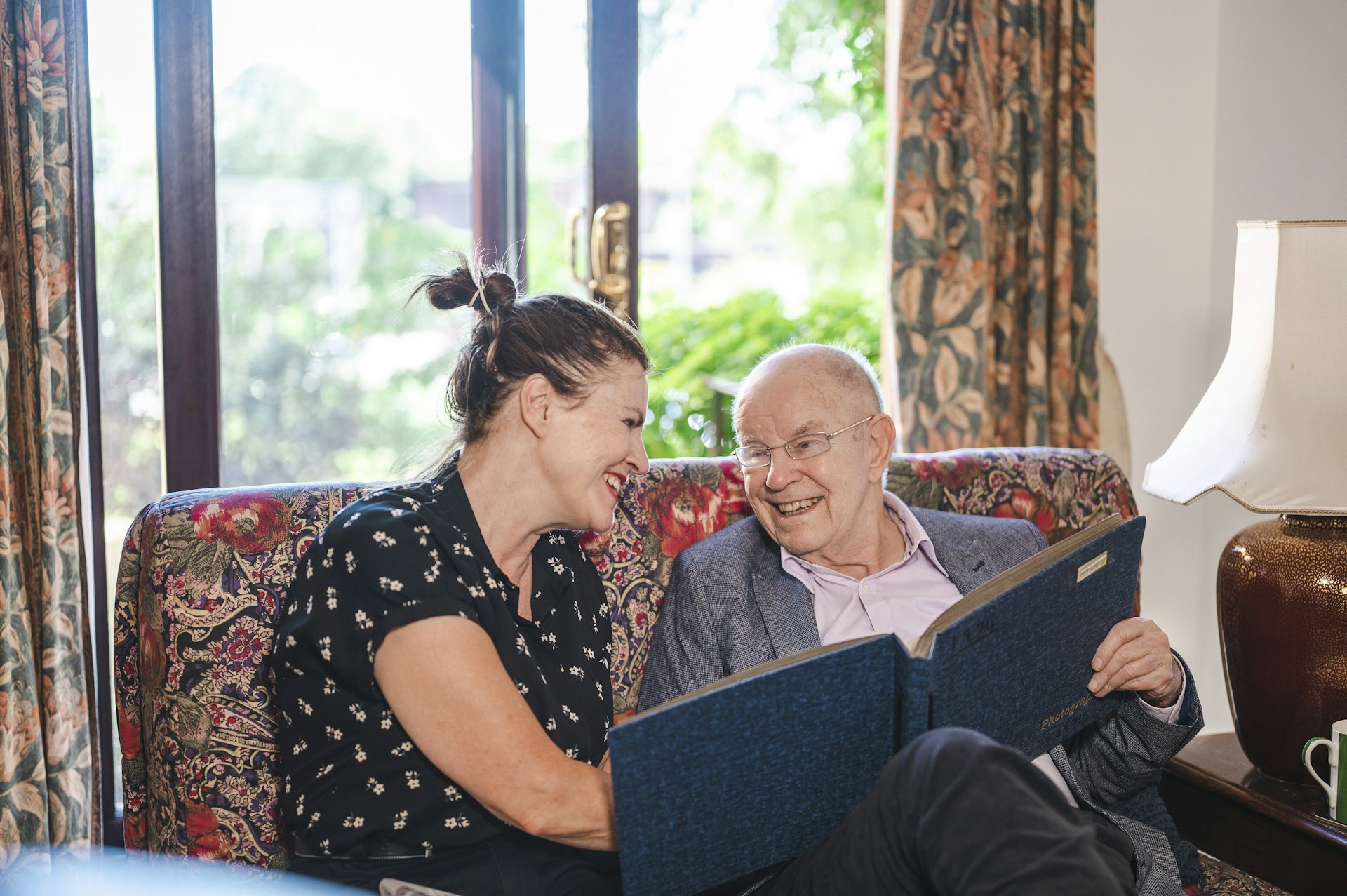

Pat, 68, from Bendigo, first noticed it at her grandson’s birthday lunch. Everyone at the far end of the table seemed to be mumbling, she kept laughing a beat too late, and by dessert she’d stopped trying to follow the conversation. At home, her husband had been grumbling about the TV volume for months. She put it down to a noisy café and tired ears.
That slow creep is typical. Age-related hearing loss usually comes on so gradually that the people around you notice before you do. The most common early signs are trouble following conversation in noisy places, difficulty on the phone, asking people to repeat themselves and needing the TV louder than others. If any of these sound familiar, it’s worth getting a hearing test with an audiologist. You don’t need a doctor’s referral, and free checks and government-subsidised services are available for many older Australians.
How common hearing loss is
Around 3.6 million Australians have some level of hearing loss, a figure cited by the RACGP and used in the Australian Government’s hearing health planning. It becomes much more common with age. Figures quoted on healthdirect suggest about half of people aged 60 to 70 have some hearing loss, rising to around 80% after 80.
The most common cause in older people is presbycusis, a gradual, permanent loss of the inner ear’s ability to pick up sound. It usually affects high-pitched sounds first. That’s why speech can seem loud enough but unclear: consonants like “s”, “f”, “th” and “sh” are high-pitched, and when they drop out, words blur together. Years of noise exposure, some medicines, ear wax, infections and conditions such as Ménière’s disease can also play a part.
The early signs to watch for
Healthdirect lists these common signs of hearing loss in adults:
- trouble hearing in noisy places, such as restaurants, clubs or family gatherings
- difficulty hearing on the phone
- often asking people to repeat themselves
- needing the TV or radio louder than other people do
- buzzing or ringing in the ears (tinnitus)
- avoiding situations because hearing is difficult
Other everyday clues include:
- finding it easier to understand men’s voices than women’s or children’s, which tend to be higher-pitched
- missing the doorbell, the kettle or the phone ringing in another room
- feeling tired after social events because of the effort of listening
- relying more on lip-reading, or struggling when someone speaks from behind you or another room
- family members commenting that you’ve misheard or answered the wrong question
Ringing or buzzing in the ears often goes hand in hand with hearing loss. Our guide to tinnitus in older adults covers its causes and what helps.
When hearing loss is an emergency
Most age-related hearing loss develops over years. Sudden hearing loss is different. If you lose hearing suddenly, usually over hours or up to three days, often in one ear and sometimes feeling like a blocked ear, healthdirect advises going to your local emergency department. Fast treatment can make a difference to recovery, so don’t wait for a routine appointment.
Get prompt medical care, too, if hearing loss comes with dizziness, ear pain, ringing, facial weakness or numbness, or follows a head injury or a very loud noise. If you’re unsure, the healthdirect helpline (1800 022 222) has registered nurses available 24 hours a day, 7 days a week. In an emergency, call 000.
When to book a hearing test
Healthdirect doesn’t recommend routine hearing checks for people without symptoms, but it does recommend seeing an audiologist if you have signs of hearing loss. In practice, that means booking a test if:
- you recognise two or more of the signs above
- family or friends have mentioned your hearing more than once
- you’ve started avoiding gatherings, the phone or group conversations
- you have ringing in one or both ears that doesn’t go away
- you hear better in one ear than the other
There’s good reason not to put it off. The 2024 Lancet Commission on dementia identified hearing loss as one of 14 modifiable risk factors and estimated it accounts for around 7% of dementia cases worldwide, among the largest single contributors. That doesn’t mean hearing loss causes dementia, but treating it is one of the more practical steps you can take for brain health. Untreated hearing loss is also linked with social isolation and missed safety cues.
What happens at a hearing test
A full hearing assessment with an audiologist usually takes about an hour. Expect:
- A conversation about your hearing, health, medicines, noise exposure and the situations you find hardest.
- A look in your ears with an otoscope to check for wax, infection or damage to the eardrum.
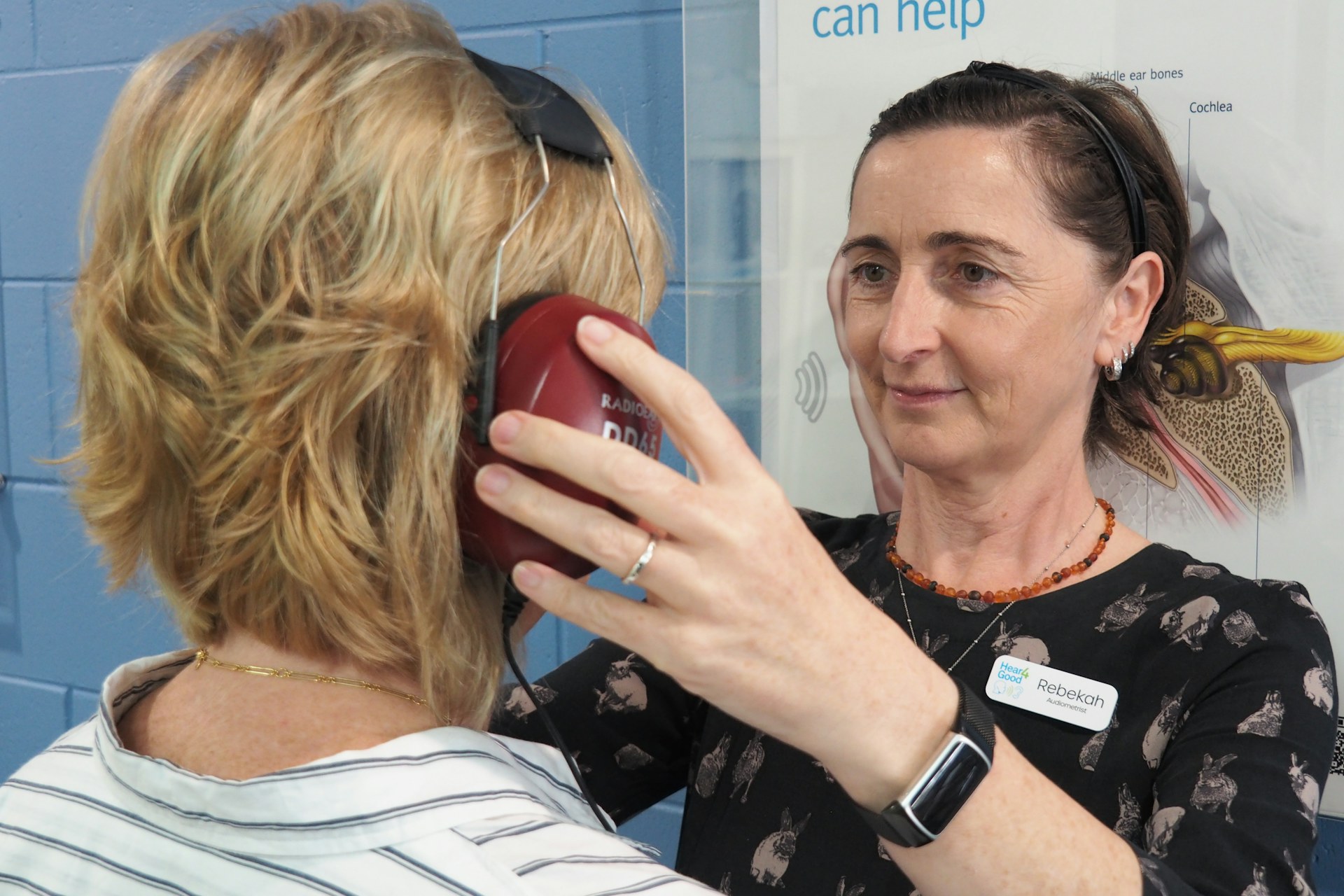
- Pure-tone testing in a quiet booth or room, wearing headphones and pressing a button or raising a hand when you hear a beep. This maps the softest sounds you can hear at different pitches.
- Speech testing, where you repeat words at different volumes, sometimes with background noise.
- Middle ear checks, a quick, painless pressure test of how your eardrum moves.
- Results and options, explained using your audiogram, with recommendations that may range from wax removal or a GP referral to hearing aids or communication strategies.
It’s not uncomfortable, and bringing a family member along can help, both to remember what’s said and because people close to you often have useful insight into when you struggle. If you’re comparing providers, booking a comprehensive hearing test with an audiologist will tell you far more than a quick screening or an online check.
Free and subsidised options
| Option | Who it’s for | What it involves |
|---|---|---|
| Online hearing check (Hearing Australia) | Anyone | Free, about 5 minutes with headphones; a guide only, not a diagnosis |
| Free 15-minute hearing check (Hearing Australia) | Adults 18 and over | In-person screening at no cost or obligation; other services may attract fees |
| Hearing Services Program voucher | Australian citizens or permanent residents aged 21+ who hold a Pensioner Concession Card, Veteran Gold Card or Veteran White Card (hearing conditions), or are the spouse of a holder, plus some ADF members and others | Subsidised hearing assessment and, if needed, fully subsidised hearing aids, follow-ups and annual reviews through a registered provider |
| Department of Veterans’ Affairs | Gold Card holders and White Card holders with accepted hearing conditions | Hearing services through the Hearing Services Program, with DVA covering the maintenance agreement for fully subsidised devices |
A Commonwealth Seniors Health Card on its own does not make you eligible for the Hearing Services Program, which surprises many self-funded retirees. Vouchers are valid for five years. You can apply online or through a registered hearing provider, and Hearing Australia offers help applying on 134 432. Our explainer on free hearing aids for pensioners walks through the process step by step, and how much hearing aids cost covers private health extras, DVA and NDIS if you’re not eligible.
If you’re worried about someone else
Hearing loss is a sensitive subject. Many people associate hearing aids with being old, and denial is common. A few approaches tend to work better than nagging:
- Pick a quiet, private moment, not straight after a frustrating misunderstanding.
- Describe specific situations (“you seemed to miss a lot at Sunday lunch”) rather than saying “you’re going deaf”.
- Suggest the free online check or a 15-minute screening as a low-pressure first step.
- Offer to go along to the appointment.
- Make small changes in the meantime: face the person when speaking, reduce background noise and get their attention before you start talking.
Hearing, driving and safety
Hearing loss can affect everyday safety: missing a smoke alarm, a car horn or a knock at the door. Visual and vibrating smoke alarms, amplified phones and TV listening devices can help. For drivers, mild age-related hearing loss doesn’t stop you holding a car licence, but it can mean missing sirens or warning sounds. Our guide to hearing loss and driving explains the licensing rules.
Official sources: healthdirect: Hearing loss; Department of Health, Disability and Ageing: Hearing Services Program eligibility; Department of Health, Disability and Ageing: Services available under the voucher scheme; Hearing Australia: Free online hearing check; Hearing Australia: Free 15-minute adult hearing checks.
FAQ
What are the first signs of hearing loss in older adults?
Usually trouble following conversation in noisy places, difficulty on the phone, asking people to repeat themselves and turning the TV up louder than others like it. Many people also notice ringing in the ears or find women’s and children’s voices harder to understand.
Do I need a referral for a hearing test?
No. You can book directly with an audiologist without a GP referral. If you’re eligible for the Hearing Services Program, you or your provider apply for a voucher before subsidised services start.
At what age should you get your hearing tested?
There’s no set age. Healthdirect doesn’t recommend routine checks for people without symptoms, but because hearing loss is common from your 60s onwards and often unnoticed, it’s sensible to get tested as soon as you or your family notice any signs.
Are hearing tests free for pensioners?
Pensioner Concession Card holders aged 21 and over (and their spouses) can get a subsidised hearing assessment through the Hearing Services Program. Anyone 18 and over can also get a free 15-minute hearing check from Hearing Australia.
Can hearing loss be reversed?
Age-related hearing loss is permanent, but it can be managed well with hearing aids and other devices. Some causes, such as ear wax or an infection, can be treated. Sudden hearing loss needs emergency care because early treatment can improve recovery.
Is an online hearing test accurate?
An online check is a useful guide to whether you should get tested, but it isn’t a diagnosis. Results depend on your headphones and surroundings, and only a full assessment by an audiologist can measure the type and degree of hearing loss.
This article is general information only and isn’t medical advice. Eligibility rules and services were checked against official sources, including healthdirect, the Department of Health, Disability and Ageing and Hearing Australia, in November 2026 and can change. If you’re concerned about your hearing, see an audiologist or your GP, and seek emergency care for sudden hearing loss.